Emergency door readiness guide

Garage Door Track Repair

Track alignment guidance without fake ratings, fake addresses, or unverified service claims.

  • Identify the door condition
  • Keep the opening clear
  • Request a repair review
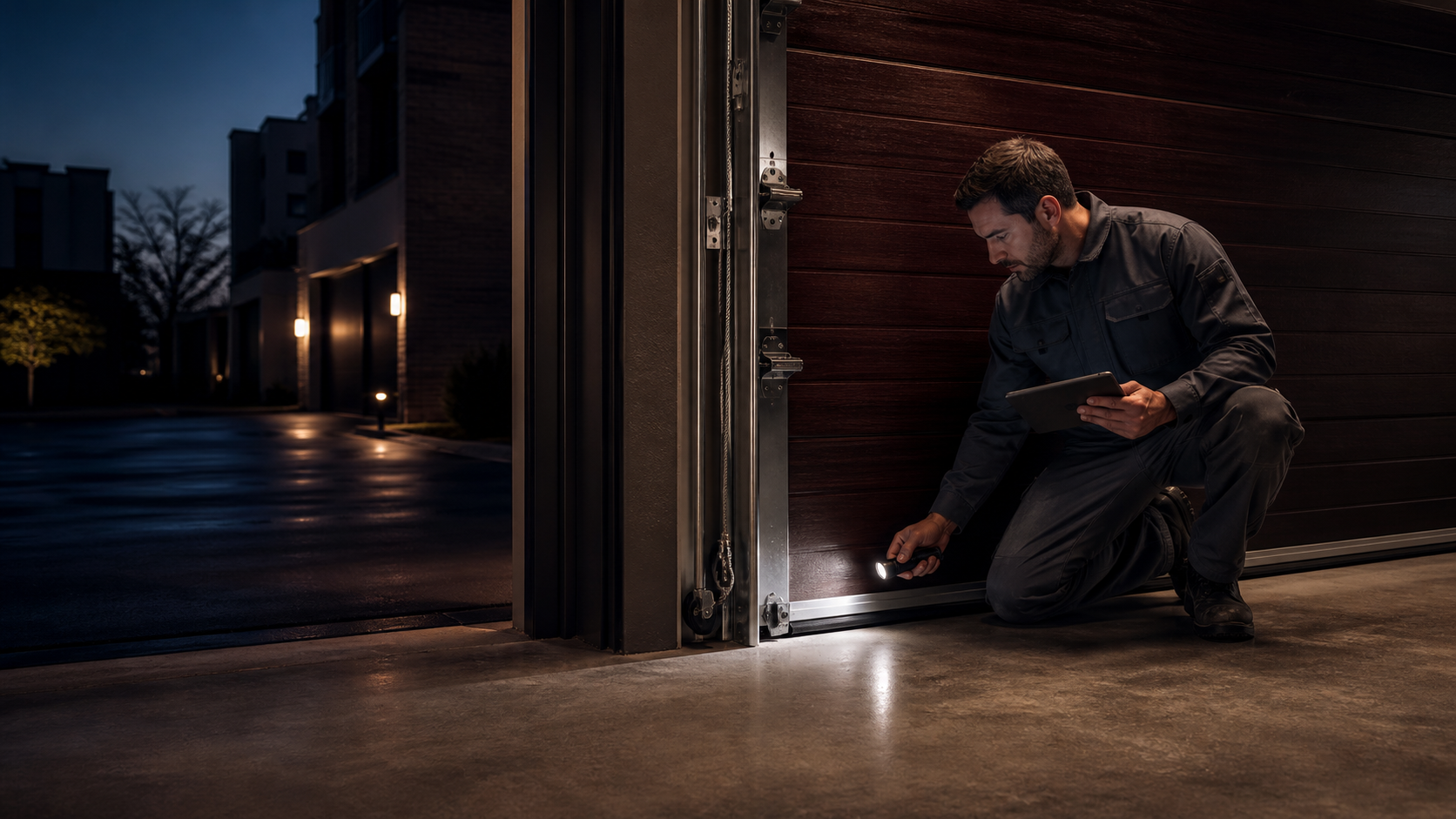
Garage door technician inspecting the bottom track and cable path of a stationary sectional door

Stop-use signals

Bent or misaligned tracks can turn a small problem into door damage if forced. If a spring, cable, track, or opener is under stress, stop using the door and describe the symptoms clearly. This evidence-led guide connects the visible clue to the wider moving-door system before a category is selected.

Useful request details

Document the garage door track repair condition before another cycle: door position, direction of travel, unusual sound, visible hardware changes, and the wall-control response.

Mechanical checks

The visible garage door track repair clue may originate elsewhere in the system, so a useful assessment considers balance, guidance hardware, lift components, and controls together.

Safety boundary

Treat a suspected garage door track repair problem as a stop-and-observe situation. Do not release brackets, cables, or spring hardware that may still carry force.

Planning context

When safe, pair one full-door image with a closer garage door track repair detail and the opener model label; that context can make the first service conversation more precise.

System-first garage door guide

Understand the whole moving system

A useful garage door track repair request begins with observable behavior, not a guessed part. Document a bent, separated, obstructed, or misaligned track condition. Then note the door position, the last normal operation, the control used, and anything visibly different while staying outside the travel path.

Stop and isolate

Keep clear when the door looks unstable

Do not stand, walk, park, or work beneath a door that may fall or move unexpectedly. Do not loosen springs, cables, drums, bottom brackets, tracks, hinges, operator arms, or loaded fasteners. If the opening cannot be observed safely, stop using it and keep people, pets, and vehicles away.

01

Record the resting position

State whether the door is fully closed, fully open, crooked, or stopped between positions. Note whether one side appears lower, a roller has left a track, a cable looks slack, a panel is folded, or an operator arm appears disconnected. Describe only what is visible without touching loaded hardware.

02

Reconstruct one normal attempt

Explain which authorized control was used and what followed: motor sound, light flash, click, partial travel, reversal, hesitation, vibration, silence, or unexpected movement. Do not repeat the attempt when the door binds, hangs unevenly, strains, or creates a new impact sound.

03

Separate door from operator

The door assembly and automatic opener interact but are not the same system. Report whether the opener activates, whether the trolley or rail moves, whether the door itself changes position, and whether photo-eye indicators appear normal. Do not pull a release cord when the door is open, unstable, or unusually heavy.

04

Describe the desired outcome

Say whether the priority is safe closure, restored access, reliable daily operation, quieter travel, weather protection, control compatibility, or evaluation after visible damage. A precise outcome helps organize the inspection without assuming that one named component is the complete cause.

Five-part observation map

Door, balance, guidance, control, and opening

Door sections and hardware

Look from a safe position for panel separation, loose-looking hinges, displaced rollers, damaged brackets, rubbing edges, or a change in how sections meet during travel.

Balance and lift system

Springs, cables, drums, and bottom fixtures can hold dangerous stored energy. Record visible gaps, slack, or asymmetry without touching, winding, loosening, or testing these parts.

Tracks and travel path

Note bends, gaps, obstructions, shifted fasteners, roller alignment, and where a noise or hesitation occurs. Keep hands and tools away from tracks while controls are used.

Operator and controls

Identify the wall control, remote, keypad, sensors, motor unit, rail, trolley, and manual release. Report lights, sounds, display codes, and which authorized controls still respond.

The surrounding opening

Include floor slope, framing contact, stored items, vehicle clearance, weather seals, and any recent impact or construction. Conditions around the opening can change travel even when the main hardware appears intact.

Useful photos and details

  • A wide view showing the entire door and its resting position.
  • Safe side views of tracks, rollers, panels, and operator rail.
  • Indicator lights or display messages without passwords or codes.
  • The door material, approximate width, and number of sections.
  • What changed, when it changed, and what still works normally.
  • Parking, shared-access, commercial, or property-management constraints.

Details to keep private

  • Keypad codes, Wi-Fi credentials, account passwords, or access schedules.
  • Remote serial data that functions as an access credential.
  • Complete identity, payment, tenant, employee, or ownership documents.
  • Interior security layouts or images showing unrelated valuables.
  • Alarm details or instructions for bypassing another security control.
  • Any photo that requires standing under or touching an unstable door.

Direct answers before requesting service

Should the door be tested repeatedly?

No. Stop repeated testing when the door strains, binds, hangs unevenly, leaves its track, produces an impact sound, or appears unstable. One clear description is safer and more useful than repeated operation.

Can a photo identify the complete repair?

No. Photos can document visible condition and help classify the request, but final scope depends on the full door, balance, track, operator, controls, opening, and safe on-site observations.

Should springs, cables, or bottom brackets be adjusted?

No. These parts can carry hazardous stored energy. Do not loosen, wind, cut, clamp, or reposition them. Keep clear and describe visible symptoms from a safe location.

What belongs in the first message?

Include the door position, the exact sequence during one normal attempt, visible changes, available controls, the desired outcome, and any access constraints. Exclude passwords, codes, and private security information.

Request readiness

Make the handoff easy to verify

Before sending the request, confirm that it names the opening, resting position, control used, sequence of movement or sound, visible condition, and safety boundary. Keep events in order and distinguish observation from assumption. This reduces the chance that a control problem, balance issue, track condition, or damaged section is mislabeled.

After a scope is discussed, ask which components are included, which remain in place, what conditions could change the plan, and how safe operation will be checked. Do not resume normal use until the door travels predictably, safety functions are understood, and every intended authorized control has been reviewed.

Send the issue

For garage door track repair, explain the last normal movement and the first changed behavior, then note whether the opening can currently be secured without forcing the door.