
Stop-use signals
The repair planning angle focuses on safe intake before anyone forces a heavy moving door. If a spring, cable, track, or opener is under stress, stop using the door and describe the symptoms clearly.
Emergency door readiness guide
Recognize garage door warning signs, understand safer next steps, and prepare a detailed service request without forcing a damaged door.
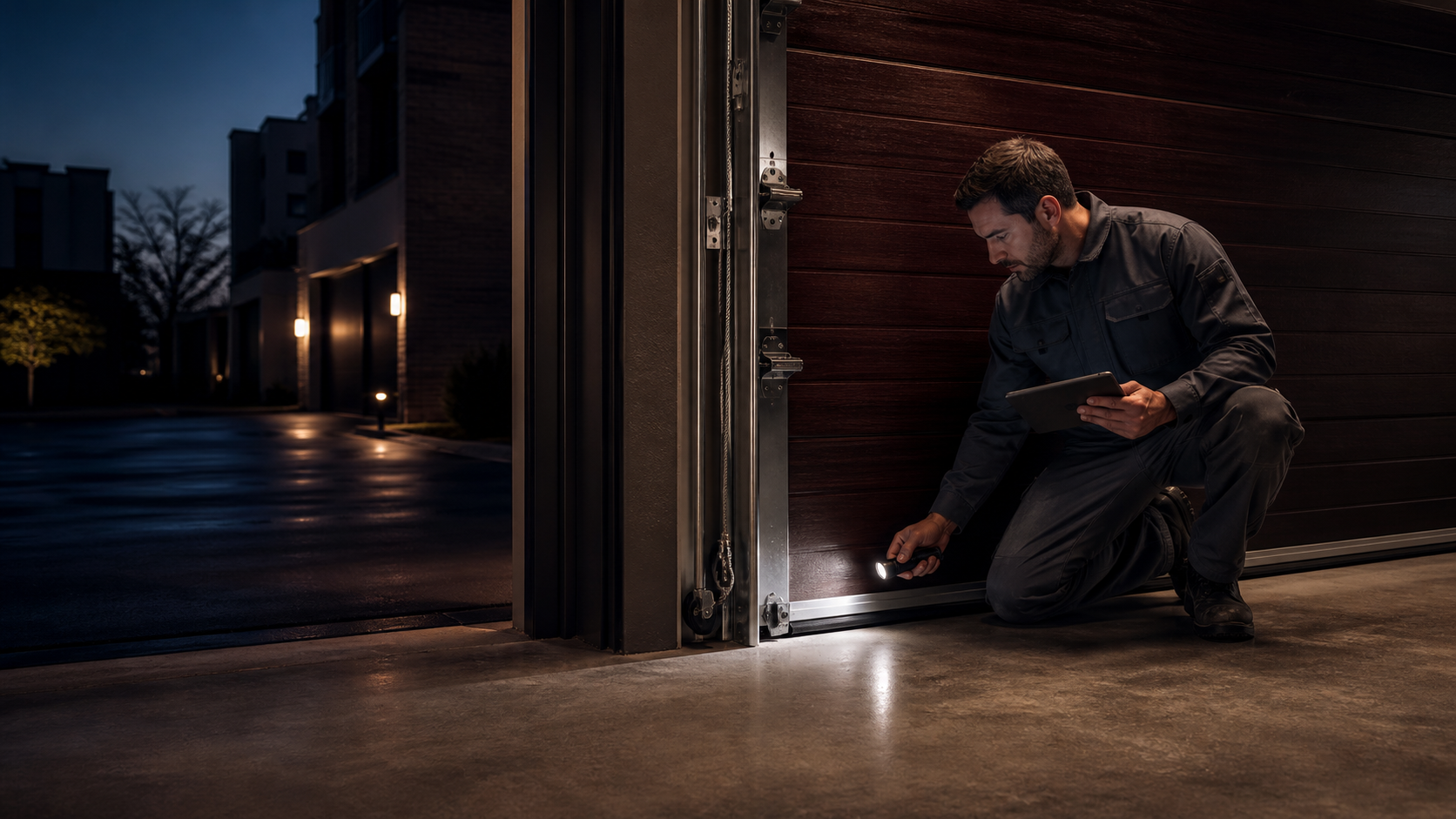
The repair planning angle focuses on safe intake before anyone forces a heavy moving door. If a spring, cable, track, or opener is under stress, stop using the door and describe the symptoms clearly.
Document the garage door condition before another cycle: door position, direction of travel, unusual sound, visible hardware changes, and the wall-control response.
The visible garage door clue may originate elsewhere in the system, so a useful assessment considers balance, guidance hardware, lift components, and controls together.
Treat a suspected garage door problem as a stop-and-observe situation. Do not release brackets, cables, or spring hardware that may still carry force.
When safe, pair one full-door image with a closer garage door detail and the opener model label; that context can make the first service conversation more precise.
Send a guarded request with the safest amount of detail.
For garage door, explain the last normal movement and the first changed behavior, then note whether the opening can currently be secured without forcing the door.